Board game · 2 to 6 players · 60 to 180 minutes
Provenance
Paris, 1874. Back the painters everyone laughs at.
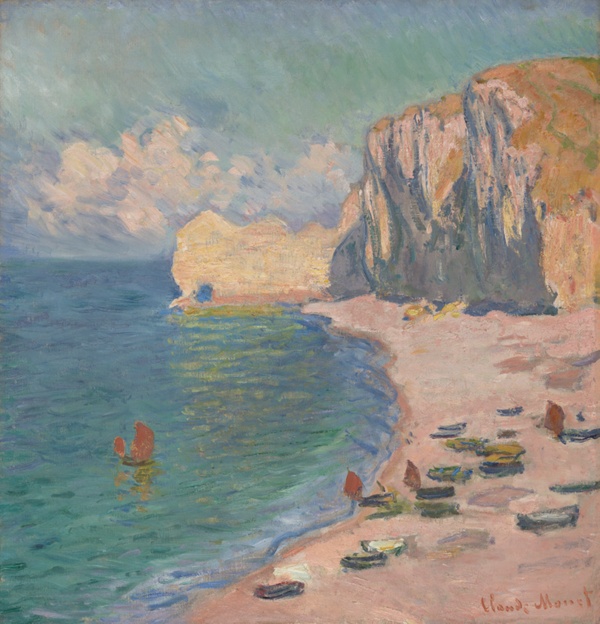
On the lid: Claude Monet, Étretat: The Beach and the Falaise d’Amont, 1885. Oil on canvas. Art Institute of Chicago.
You are an art dealer in the years of the eight Impressionist exhibitions. Buy into unknown painters, win their work at auction, hang it, sell it. Twelve years later, the table finds out who had the eye.
Lift the lid
It opens like a catalogue.
The lid is a tight fit, so it sinks slowly on a cushion of air. The first thing you see is the rulebook, made as a thin exhibition catalogue.
A ribbon lifts it out and shows the folded board. Under that, player boards on one side and the card tray on the other. Each layer has its own ribbon. No plastic.
Provenance
Paris, 1874–1886
Rules of play and Almanac
Why it is worth the table
A euro game made of real history.
- 01
Real paintings you can hold
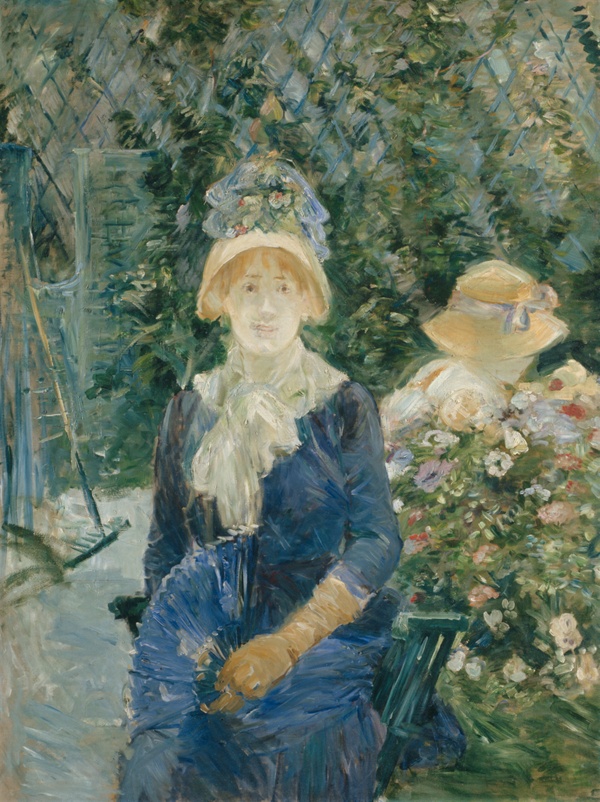
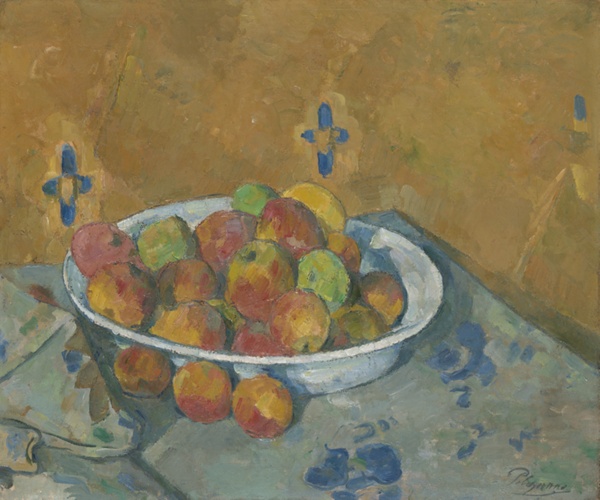
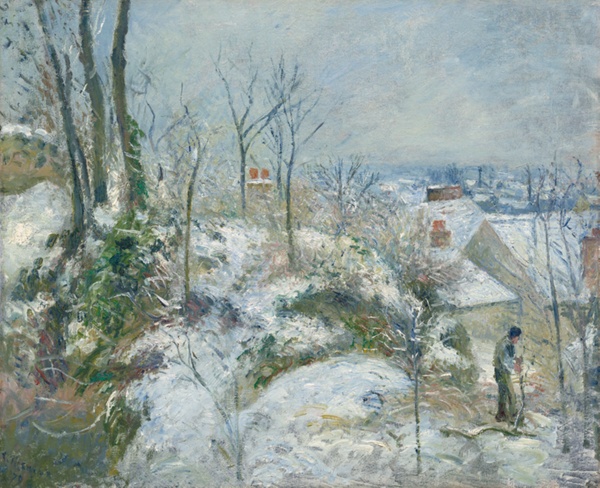
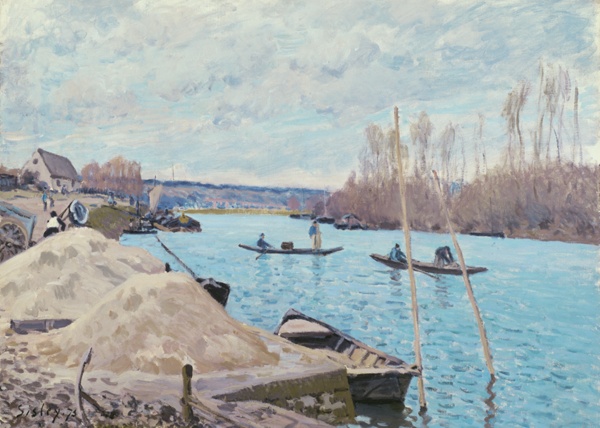
Every artwork card is a real work, printed whole on a white mat with its museum label. Nothing is cropped.
- 02
Real history on every card
Every date, sale and quarrel comes from a source: the French Ministry of Culture, the National Gallery and others.
- 03
You play a real dealer
Durand-Ruel, Père Tanguy, Mary Cassatt and five more. Each starts with a small edge taken from what they actually did.
- 04
Bid, back and build
Buy shares in painters the way you buy railways in an 18xx game. Place assistants around Paris. Hang shows. Sell high.
- 05
Every season is a real year
One season for each Impressionist exhibition, 1874 to 1886. Royal weddings, world’s fairs and new fortunes move the market.
- 06
Learn without trying
By the end you know who showed in 1874, who left for the Salon, and how a critic’s insult became the name of a movement.
How a season plays
Eight phases. One year of the Paris art market.
- 1
The Morning Papers
A real event from that year is read aloud from the newspaper. Collectors and a museum arrive with requests.
- 2
Patronage
Debut an artist, or buy and sell their shares. Whoever holds the most shares runs the studio.
- 3
In the Studios
Lead patrons spend studio money on studies, major works and, later, masterpieces.
- 4
The Season in Paris
Place your assistants. Visit a studio, court a collector, call the press, see the bank, open London or New York.
- 5
The Auction House
New works go under the gavel: open bidding, sealed bids or a Dutch auction where the price falls.
- 6
Gallery Night
Hang your walls and exhibit. Artists shown together gain value.
- 7
The Market
Sell to collectors, place work in museums, lend to exhibitions, trade with rivals.
- 8
Royalties
Pay your shareholders and the artist rises. Keep the money in the studio and they fall.
The board
The lot sits in the middle, on its own mat.
580 × 580 mm, in six panels. A die-cut top layer over a base, so every piece sits in a recessed well and a bumped table moves nothing.
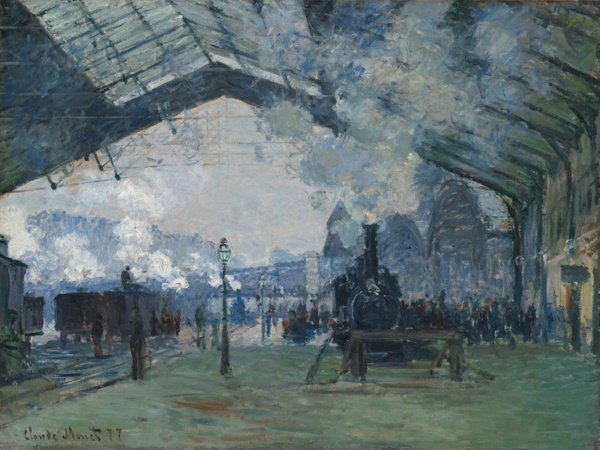
Oil on canvas · Art Institute of Chicago
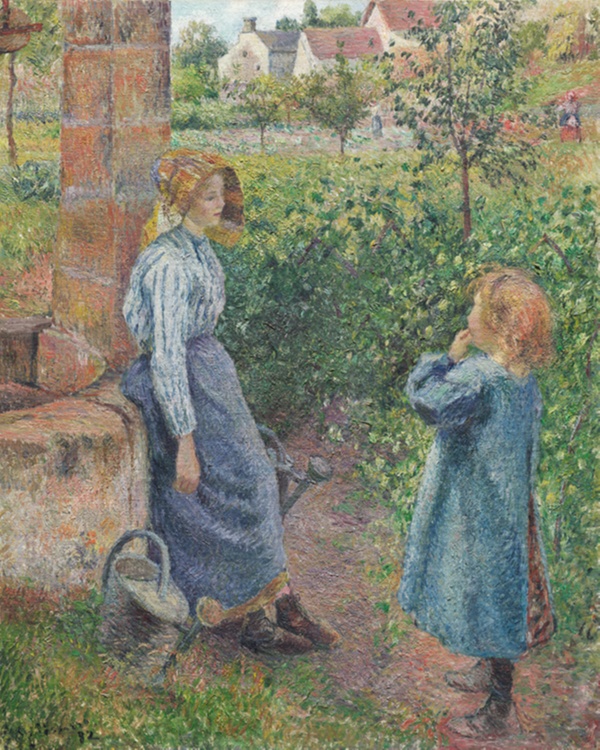
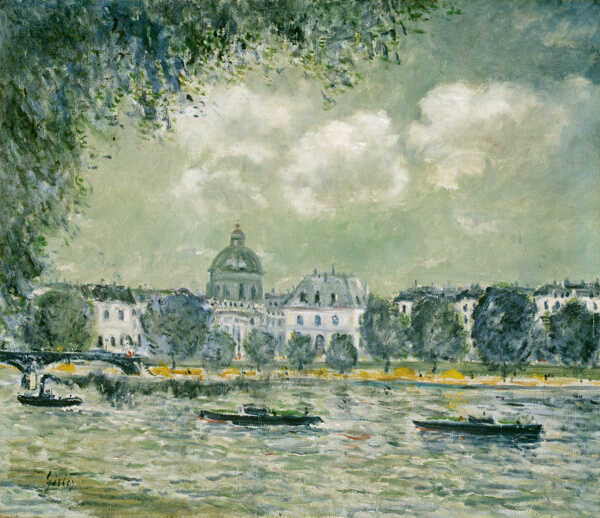
Oil on canvas · Art Institute of Chicago
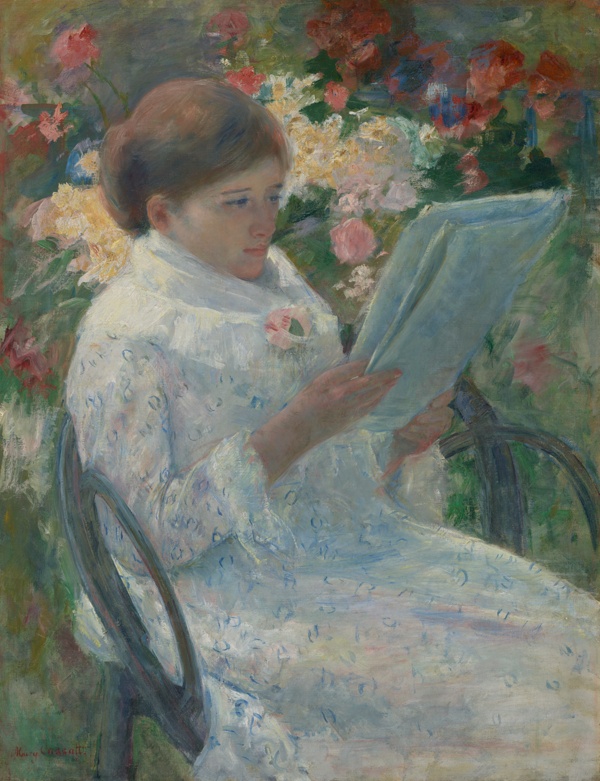
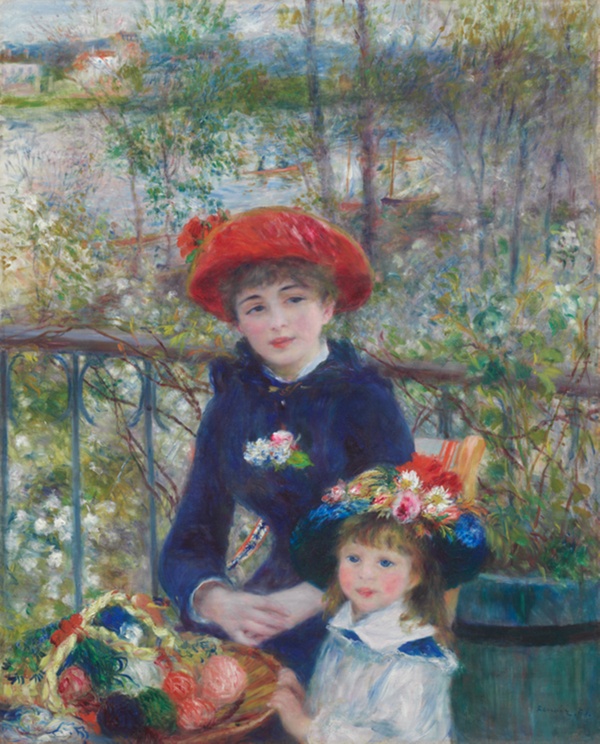
Oil on canvas · Art Institute of Chicago
- Artist tracks. Eight rows of 30 steps, from 100 F to 3,200 F.
- Paris. Spaces for your assistants, one well per seat. When a space is full, it is full.
- The lot. The work for sale, flanked by the falling price for Dutch auctions. The next two wait face up.
- The year. Eight seasons, one for each exhibition, 1874 to 1886.
- The Bourse and the market. Unsold shares, collectors, the museum and the commission deck.
The artwork cards
Each card is a work you can hold.
The front is the work itself, whole, on a wide mat, with its museum label. The back gives the artist, a line of real history and how the estimate is set.
Cards are 70 × 100 mm on heavy matte linen stock. There are 120 of them, 15 for each of the eight artists.
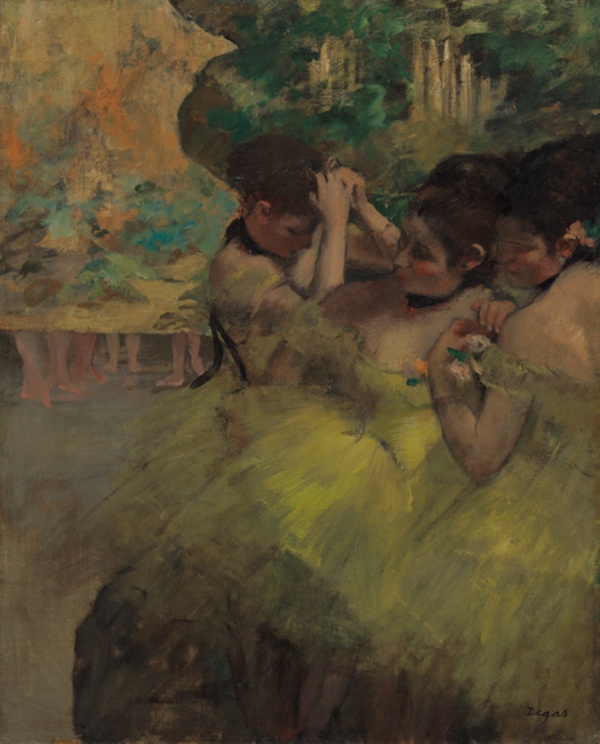
Provenance
Edgar Degas
1834 to 1917
His wax Little Dancer Aged Fourteen, with real hair and a cloth tutu, divided critics in 1881.
- Estimate
- Artist value × size
Study 1 · Major work 2 · Masterpiece 3
The dealers
You are one of eight real people.
Each identity gives a small starting edge drawn from what that person did. Over 1,000 simulated four-player games, every dealer’s average score lands within 2.5% of the table average, and win rates run from 22% to 30% against an even 25%.
1870 to 1886
Paul Durand-Ruel
The Impressionists’ main dealer, who bought their work in bulk and nearly went broke doing it.
EdgeYou start with a London gallery (he met Monet and Pissarro there in 1870), and pay half interest on bank loans.
1878 to 1886
Georges Petit
Rich heir who ran a showy rival gallery to Durand-Ruel and lured Impressionists into his international shows.
EdgeYou start with a Gaslit salon already built, so your exhibitions earn 50% more from day one.
1873 to 1886
Julien “Père” Tanguy
Former Communard paint seller whose small shop took paintings from poor artists instead of cash.
EdgeStudio visits cost you 30% less because you pay partly in paint, collectors pay you 10% more for Cézanne, and you start with 300 F of stock.
1874 to 1878
Ernest Hoschedé
Department-store and textile magnate who bought Impressionists lavishly, then went bankrupt.
EdgeCommissions pay you 0.3× more, and you start with 300 F more. He went bankrupt in 1877, so mind the loans.
1875 to 1886
Gustave Caillebotte
Wealthy painter who bought his friends’ pictures and paid to stage their exhibitions.
EdgeYour exhibitions cost nothing, and paintings you keep count at full value at the end.
c.1880 to 1886
Charles Ephrussi
Banker and art writer at the Gazette des Beaux-Arts who bought about forty Impressionist works.
EdgePress campaigns are free (you write for the Gazette), you start with 200 F more and 2 reputation, museums give you 1 extra reputation, and collectors pay you 10% more for Renoir.
1877 to 1886
Mary Cassatt
American painter in Paris, exhibitor with the Impressionists, who steered rich Americans toward buying them.
EdgeBranches cost you 500 F less, and collectors pay you 10% more for Degas.
1879 to 1886
Paul Gauguin
Stockbroker turned painter who collected Impressionist works until the 1882 crash cost him his job.
EdgeYour stockbroker’s salary pays 250 F each season until the 1882 crash ends it.
History intervenes
The world does not wait for your auction.
Each season opens with what really happened that year. Royal weddings want gifts. World’s fairs want loans. New fortunes want paintings.
- 1875
Palais Garnier inaugurated
The new Paris Opera house opened on 5 January 1875 after construction from 1861, at a cost of over 36 million francs. Baudry, Pils and Lenepveu painted its ceilings.
In playOpera box-holders pay 1.8× the estimate for a Degas.
- 1876
Centennial Exposition in Philadelphia
The first official US world’s fair ran from 10 May to 10 November 1876 and drew over 10 million visitors. Its Memorial Hall was then the largest art hall in the country.
In playLend a major work or larger to Memorial Hall, Philadelphia: +2 reputation, the artist gains 1 step, and an American visitor buys from you at 1.7× next season.
- 1877
Vanderbilt fortune passes to William Henry
Cornelius Vanderbilt died on 4 January 1877. His son William Henry inherited nearly $100 million and went on to buy more than 200 paintings for his Fifth Avenue mansion.
In playWilliam H. Vanderbilt pays 2.0× the estimate for a major work or larger.
- 1877
The 16 May crisis
On 16 May 1877 President MacMahon dismissed Prime Minister Jules Simon and dissolved the Chamber on 25 June. Republicans won the October elections and MacMahon gave way on 13 December.
In playPolitical crisis: collectors pay 10% less this season.
- 1878
Exposition Universelle of 1878
Paris staged a world’s fair from 1 May to 10 November 1878 with over 13 million paying visitors. The Trocadero palace was built for it, and the Statue of Liberty’s head was shown in its garden.
In playA foreign visitor to the Exposition pays 1.6× the estimate for any work. Lend a major work or larger to the Exposition Universelle: +2 reputation, the artist gains 1 step.
- 1885
Princess Beatrice weds Henry of Battenberg
Princess Beatrice, Queen Victoria’s youngest child, married Prince Henry of Battenberg on 23 July 1885 at St Mildred’s Church, Whippingham, near Osborne on the Isle of Wight.
In playGive a major work or larger to Princess Beatrice and Prince Henry: +4 reputation.
Ways to play
One hour with family. Three hours with rivals.
Salon
About 60 minutes
4 seasons. Open auctions only, no loans or branches, no hidden goals. The first game, and the family game.
Exposition
About 2 hours
6 seasons. Every rule, plus public honours.
Connoisseur
About 3 hours
8 seasons. Dealer identities, legacy goals, specialists and wages.
Solo
6 seasons
An automa deck plays the rival dealers.
One score, in francs.
Cash, shares at the artist’s value, the works you own and your reputation all count. Every strategy is measured on the same scale. Four layers make the race interesting:
- Legacy goals
- Secret. Draw two, keep one, then do it again in the middle of the game. Each pays at the end.
- Public honours
- Five open races, 500 F to the first dealer to claim each one.
- Dealer identities
- Eight real dealers, each with a small edge from their own history.
- Tastemaker bonus
- Paid to whoever debuted the most valuable artist. Spot talent early.
In the box
Wood, paper and board. No plastic.
| Component | Count | Size and material |
|---|---|---|
| Box | 1 | 305 × 305 × 110 mm. Rigid two-piece box. The lid is one painting, full bleed, with no text. The name is blind-debossed on the side. |
| Rulebook and Almanac | 2 | 290 × 290 mm, made as a thin exhibition catalogue. |
| Main board | 1 | 580 × 580 mm. Six panels folding to 193 × 290 mm. Two layers, so every piece sits in a recessed well. |
| Player boards | 6 | 400 × 290 mm, folding once. Six gallery walls and an office for shares, rooms and loans. |
| Artwork cards | 120 | 70 × 100 mm, 15 per artist. Matte linen stock. |
| Share certificates | 80 | 44 × 63 mm, 10 per artist, engraved like a period bond. |
| Collectors, commissions, museums | 20 · 24 · 3 | 44 × 63 mm. Real patrons of the period. |
| Le Courrier des Arts | 8 | One folded newspaper per exhibition year. |
| Assistants | 36 | Wood, a top-hat silhouette. Player colour is a small painted band. |
| Markers | 16 | Turned wood discs in ink black, each artist’s initial engraved. |
| Rooms and branches | 30 · 12 | 2 mm tiles. |
| Auction paddles | 6 | Numbered, with a dry-erase back for sealed bids. |
| Banknotes | 160 | Engraved franc notes in ink and vermilion: 50, 100, 500 and 1,000 F. |
| Gavel | 1 | Small, wooden. Whoever holds it runs the auction. |
Paris is waiting.
The digital edition plays now on a TV, with each player on a phone.